What Documents You Should Never Carry Into a New Year
January is when businesses reset systems, review goals, and clean up operations. Yet one area is often overlooked year after year: paper records that no longer need to exist.
Outdated documents quietly create risk. They take up space, complicate compliance, and expose your organization to unnecessary liability. A new year is the right moment to let them go.
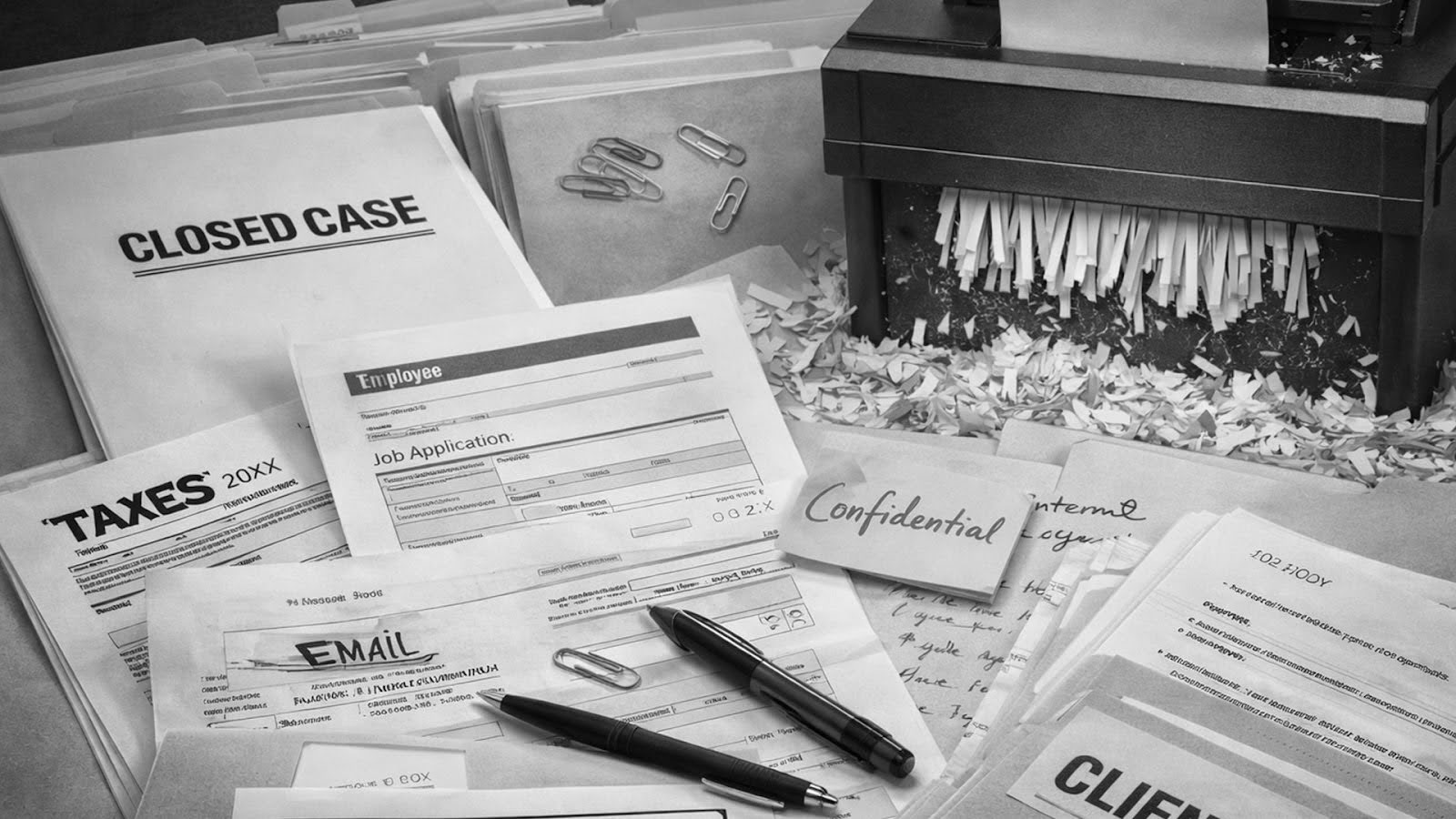
1. Expired Client or Customer Files
Once retention requirements are met, old files should not sit indefinitely in storage. Former client records often contain:
- Social Security numbers
- Financial details
- Medical or legal information
- Addresses and contact data
Keeping them past their required lifespan increases exposure without adding value.
2. Closed Case or Completed Project Records
Whether you’re in legal, healthcare, finance, or real estate, closed files are prime candidates for review. If a case is settled or a project is complete, those documents should either be securely archived or destroyed based on retention rules.
“Just in case” storage is one of the most common causes of paper-related data breaches.
3. Old Employee Records
Payroll documents, applications, background checks, and performance reviews all have defined retention timelines. Holding onto outdated employee records creates unnecessary risk, especially as teams grow and turnover increases.
4. Duplicate Paper Copies
Many offices now operate with hybrid or digital systems, yet paper duplicates remain everywhere:
- Printed emails
- Signed forms saved digitally and on paper
- Scanned records still kept in file drawers
If it exists securely in your system, the paper version often serves no purpose.
5. Financial Documents Beyond Retention Periods
Invoices, receipts, bank statements, and tax-related paperwork should be reviewed annually. Once legal and accounting requirements are met, these records should be destroyed securely rather than boxed up and forgotten.
6. Notes, Drafts, and Internal Working Documents
Handwritten notes, internal memos, drafts, and worksheets may feel harmless, but they often contain sensitive context, internal decisions, or private information that was never meant to live forever.
These documents are frequently overlooked during clean-outs.
A Clean Start Isn’t Just About What You Add
It’s about what you remove.
If those filing cabinets haven’t been reviewed recently, now is the time. Because the best way to protect the year ahead is to leave unnecessary risk behind.
Make Secure Destruction Part of Your Annual Reset
At Richards & Richards Secure Shredding, we help organizations across Middle Tennessee start each year with confidence. Our secure shredding services ensure sensitive documents are destroyed properly, documented clearly, and handled with discretion from start to finish.
No shortcuts. No uncertainty. Just responsible document management.